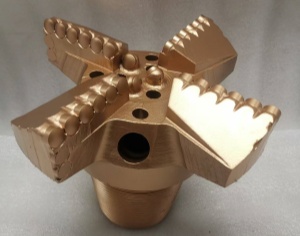
spiral blade stabilizer、PDC reaming bit
Revolutionizing Drilling: The Role of Spiral Blade Stabilizers
Drilling isn’t just about precision—it's a dance of technology, material science, and a bit of luck. Enter the spiral blade stabilizer, a game-changer in the oil and gas industry. Designed to enhance borehole stability, these stabilizers reduce vibration and improve directional control, ultimately increasing drilling efficiency.
What is a Spiral Blade Stabilizer?
Imagine drilling through layers of rock, each more stubborn than the last. The spiral blade stabilizer acts as a guide, ensuring that the drill bit maintains alignment. It’s not just an accessory; it’s a necessity. Why? Because a misaligned drill can lead to catastrophic failures and costly delays. According to industry reports, misalignment can increase drilling costs by up to 30%—that’s no small change.
The Technology Behind It
These stabilizers come equipped with advanced spiral designs. This unique geometry allows for better contact with the formation, reducing the likelihood of bit damage. Some models even incorporate PDC (Polycrystalline Diamond Compact) technology to enhance durability. The combination of spiral blades with PDC bits creates a robust system capable of tackling hard formations.
- Enhanced Stability: Reduces lateral movement.
- Improved Penetration Rate: Optimizes drilling speed.
- Cost Efficiency: Lower operational costs.
The PDC Reaming Bit: An Essential Partner
Now, let’s talk about the PDC reaming bit. Picture this: you’re deep down in the earth, and your primary goal is to navigate through challenging geological formations. Here, the PDC reaming bit shines. With its superior cutting capability, it ensures that any irregularities in the borehole are smoothed out efficiently.
The Synergy of Spiral Blade Stabilizers and PDC Bits
When paired with spiral blade stabilizers, PDC reaming bits create a dynamic duo. The stabilizer maintains hole integrity, while the reaming bit works to clear out debris and maintain a clean borehole. Take, for instance, a drilling operation in the North Sea. Using this combination, operators reported a 25% reduction in drilling time and a 15% decrease in bit wear. Incredible, right?
Real-World Applications
Consider a specific drilling project in Texas, where a company adopted this technology. They faced severe borehole instability in a shale formation. By implementing spiral blade stabilizers alongside PDC reaming bits, they not only improved the drilling performance but also avoided a potential blowout.
It’s not just about technology; it’s about survival. What would have happened without these advancements? A risky endeavor at best, and a financial disaster at worst.
Future Trends in Drilling Technologies
The drilling industry is evolving rapidly. Innovations such as smart sensors integrated into drill bits and stabilizers are becoming commonplace. These sensors can predict wear and tear, allowing for proactive measures instead of reactive fixes. Imagine being able to replace a bit before it fails! That’s not just efficiency; that’s foresight.
- Smart Technologies: Sensors for predictive maintenance.
- Material Innovations: Lighter, stronger components.
- Data Analytics: Enhanced decision-making through big data.
Conclusion: Embracing Change
In a world where drilling must adapt to tougher conditions, spiral blade stabilizers and PDC reaming bits represent just the tip of the iceberg. They embody the spirit of innovation and resilience in the face of challenges. Are you ready to embrace this change? Because the future of drilling is not just bright; it's blazing.