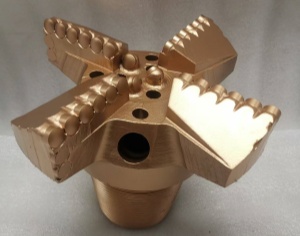
Impregnated Diamond Drill Bits & Matching Reaming Shells

Full-Range Solutions for Geological and Engineering Drilling
Key Facts at a Glance : We manufacture impregnated diamond drill bits and matching diamond reaming shells in 14 standard diameters: 36, 45, 50, 56, 60, 76, 91, 94, 110, 130, 150, 171, 200 and 220 mm. Our products suit fine sandstone, basalt, granite, limestone, dolomite, cobble, marble and gneiss, serving geological drilling, engineering survey and mining projects.

1. Product Overview
An impregnated diamond bit carries diamond particles dispersed throughout a metal matrix. As drilling proceeds, the matrix wears gradually and fresh diamonds emerge layer by layer, forming micro-cutting edges that grind the rock. This mechanism delivers stable service life and sustained penetration in medium-hard to hard, abrasive formations. We tune matrix hardness and diamond mesh size to the abrasiveness of each formation: harder matrices resist wear in highly abrasive rocks such as granite and basalt, while softer matrices promote timely diamond exposure in low-abrasiveness formations such as limestone and marble, preventing bit polishing.
Matching diamond reaming shells are produced in the same batch as their bits, with outer diameters set 0.3–0.5 mm above the bit diameter. They dress the borehole wall, maintain gauge, stabilize the drill string and reduce trips and reaming caused by hole tightening.
2. Standard Sizes
| No. | OD (mm) | No. | OD (mm) |
|---|---|---|---|
| 1 | 36 | 8 | 94 |
| 2 | 45 | 9 | 110 |
| 3 | 50 | 10 | 130 |
| 4 | 56 | 11 | 150 |
| 5 | 60 | 12 | 171 |
| 6 | 76 | 13 | 200 |
| 7 | 91 | 14 | 220 |
These sizes are held as semi-finished stock. Non-standard diameters and special thread types are made to drawing.
3. Formation Matching Guide
| Formation | Matrix Hardness Tendency | Diamond Mesh Tendency | Reaming Shell Oversize | Notes |
|---|---|---|---|---|
| Granite, basalt, gneiss | Higher | Finer | +0.3 mm | Highly abrasive; resist matrix wear |
| Limestone, marble, dolomite | Medium-low | Medium | +0.3–0.4 mm | Low abrasiveness; promote exposure, prevent polishing |
| Fine sandstone, cobble (broken zones) | Higher | Medium-fine | +0.4–0.5 mm | Maintain hole stability in broken ground |
Final selection should also consider rig RPM, flushing fluid type and hole depth. Contact us with your working conditions for a tailored recommendation.
4.FAQ
Q1: What should I do if an impregnated bit polishes in granite?
Polishing occurs in tight, hard formations with low abrasiveness, where the matrix wears too slowly for diamonds to expose. Reduce WOB and increase RPM to generate more friction at the bit face, or add a small amount of quartz sand to the hole bottom to abrade the matrix. For selection, choose a bit with a softer matrix or coarser diamond mesh, and standardize that formulation for future batches.
Q2: Must the reaming shell be replaced together with the bit?
No. Shells generally outlast bits, but their OD should be checked at every trip. Replace the shell when its OD has worn close to the new bit diameter and the 0.3–0.5 mm oversize margin is lost; otherwise a new bit may run tight or require reaming.
Q3: Can you customize sizes below 36 mm or above 220 mm?
Yes. The 14 sizes above are stock items; sizes below 36 mm or above 220 mm, and special thread types, can be made to drawing. Please provide OD, ID, thread type and target formation.
Q4: What projects are these products used in?
They are used in geological core drilling, mining engineering, engineering geological survey and water well drilling, covering fine sandstone, basalt, granite, limestone, dolomite, cobble, marble and gneiss.