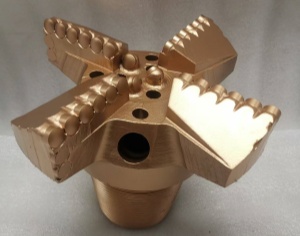
Core bit sizes for cobble geotechnical investigation
Core Bit Sizes for Cobble Geotechnical Investigation
Geotechnical investigations—crucial, yet often underappreciated. Take a moment. Why should we focus on core bit sizes? They’re not just tools; they’re the foundation of reliable data collection. In the world of geological exploration, selecting the right core bit can make the difference between success and failure.
Understanding Core Bit Types
Core bits come in various sizes and types, tailored for specific geological conditions. For instance, in soft earth formations, a mining bit designed with a steel body often proves effective. This structure, made from high manganese alloy steel, offers superior impact toughness and rapid drilling capabilities.
- Steel Body: Suitable for shallow water wells and soft strata.
- Tungsten Carbide Matrix: Best for deep wells with abrasive materials.
These design choices are not trivial. When drilling through abrasive sandstone, for example, a tungsten carbide body provides anti-erosion properties that ensure durability and longevity. Can you imagine the frustration of frequent bit replacements?
PDC Technology at Work
Enter the realm of PDC drill bits . Integrating polycrystalline diamond compact (PDC) technology revolutionizes the drilling process. These bits, like the OGF1308 model with a 13.44mm diameter, are engineered for extreme conditions. Remarkable wear resistance—up to ten times greater than traditional carbide inserts—translates into more efficient drilling operations. Why would you settle for less?
Consider the implications: with a single bit, effective footage can exceed 500 meters. The chipping failure rate drops by 60%. What does this mean in practical terms? Less downtime, reduced costs, and improved project timelines.
Application Specifics
When conducting a cobble geotechnical investigation, the choice of bit must align closely with the geological composition of the site. For instance, in regions where mixed rock formations dominate, the flexibility of a core bit with customizable small cutters becomes essential. These bits adapt easily to rocks with compressive strengths less than 25,000 PSI. It's a clear advantage.
- Fast Penetration Rate: Drilling speeds can be two to four times faster than tricone bits.
- Stable Hole Quality: Reduced vibrations minimize borehole deviation.
If a drilling contractor opts for a less efficient bit, what might they miss in terms of critical geological data? The stakes are high in this game.
Recommended Drilling Parameters
To maximize the performance of core bits during a cobble geotechnical investigation, adhering to specific drilling parameters is paramount. For instance, a weight on bit (WOB) of 0.4–1.2 kN per mm diameter combined with a rotation speed of 60–250 RPM ensures optimal functionality. The expected single bit life extends between 3,000 and 6,000 meters under favorable geological conditions. These numbers aren’t just statistics—they’re benchmarks for success.
In practice, the interplay between drilling parameters and geological conditions can significantly alter the outcomes of a project. A contractor ignoring these details might as well be sailing in uncharted waters without a map.
Conclusion: The KBJZ Advantage
At the end of the day, choosing the right core bit is about more than just specifications. It’s a decision that affects timelines, budgets, and ultimately, project success. KBJZ stands out as a professional manufacturer of coal mine drill bits, offering a rich variety of options tailored for every unique geological scenario. With premium PDC cutters and tungsten carbide alloys, our bits are designed for performance, durability, and efficiency.
So, the next time you're in the market for core drill bits, remember: it’s not just about finding a tool. It’s about selecting a partner in your geological exploration journey. What will you choose?